

Infertility can result from problems with ovulation, egg supply or quality, the fallopian tubes, uterus, cervix, sexual function, or sperm. Knowing when to seek evaluation and what each test can establish helps you avoid delayed diagnosis, unnecessary treatment, and false reassurance from a single normal result.
Key takeaways
- Seek evaluation after 12 months trying if under 35, or six months from age 35.
- Ovulation disorders, egg biology, pelvic disease, uterine conditions, and semen factors can affect conception.
- Evaluate both partners because semen analysis is simple, important, and frequently overlooked.
- Treat findings that explain infertility rather than chasing every minor abnormal result.
When to seek an infertility evaluation and what the first visit covers
Infertility is defined as failure to achieve pregnancy after 12 months of regular, unprotected intercourse. If you are under 35, arrange an evaluation after 12 months trying to conceive. At 35 to 39, seek help at 6 months after age 35 rather than waiting a full year.
At age 40 or older, contact a fertility specialist promptly; that is the appropriate fertility evaluation timing.
Seek evaluation sooner if you have:
- Absent or highly irregular periods
- Suspected endometriosis, severe period pain, or pain during intercourse
- A history of pelvic inflammatory disease, chlamydia, gonorrhea, or tubal surgery
- Previous chemotherapy, pelvic surgery, or a known fertility problem
- Recurrent miscarriages or a partner with testicular, ejaculation, or sperm concerns
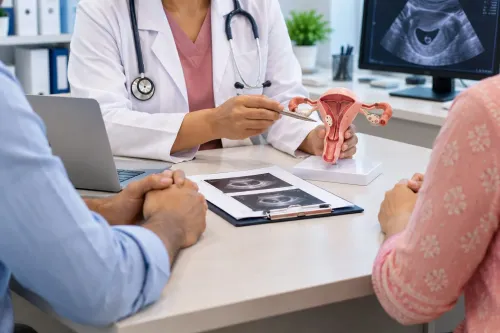
The first visit covers your menstrual and pregnancy history, intercourse timing, previous treatments, surgeries, infections, medications, and health conditions. The clinician may discuss an examination and targeted tests rather than ordering everything automatically. Early evaluation usually includes semen analysis for the sperm-producing partner, along with assessment of ovulation and the uterus and fallopian tubes.
Thyroid or prolactin testing is added when symptoms or cycle changes support it. Normal results identify no major barrier; they do not guarantee pregnancy in the next cycle.
The main causes: ovulation, egg biology, pelvic disease, and the uterus
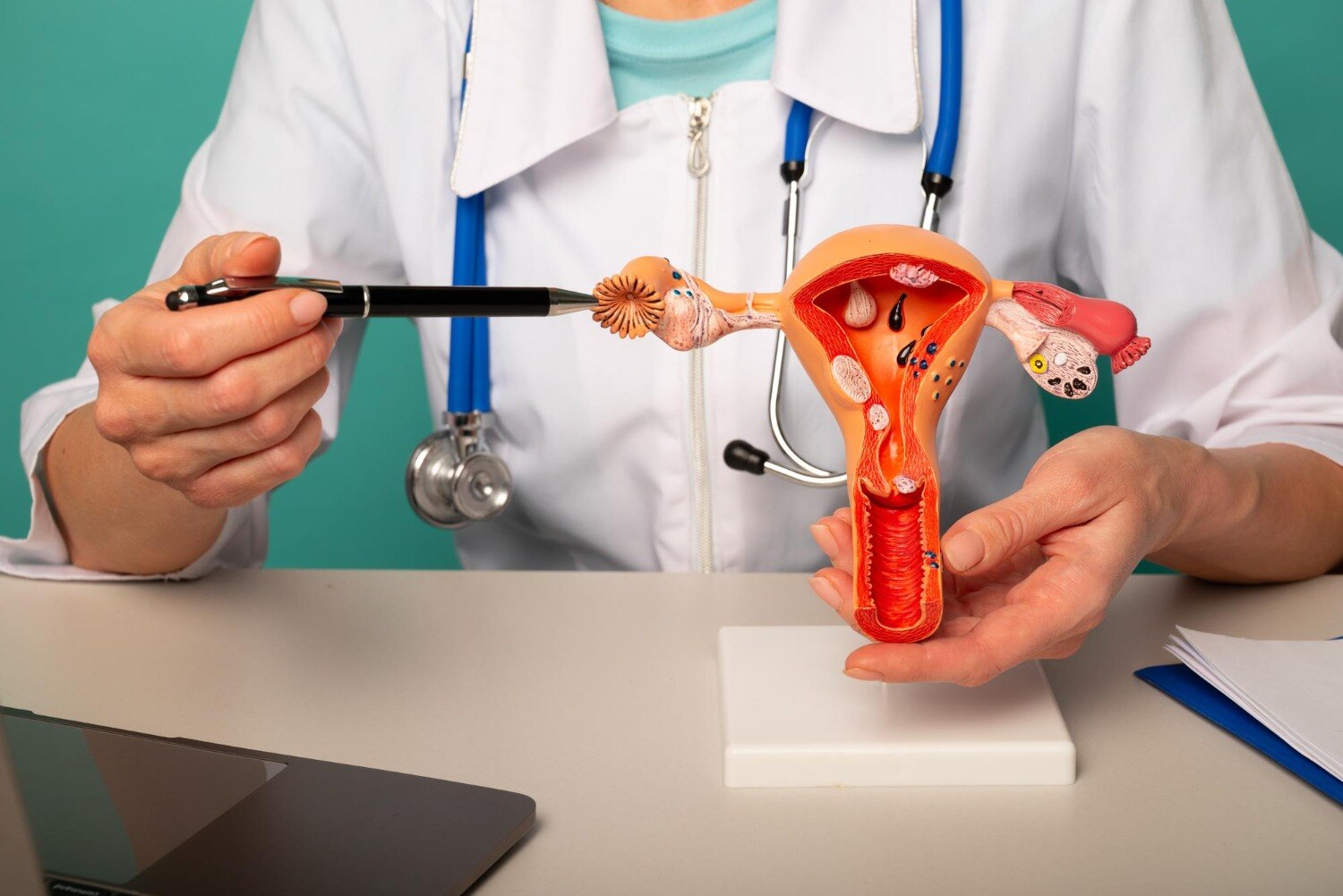
Conditions that prevent conception differ in both symptoms and mechanism. Some stop an egg being released; others reduce the number or competence of eggs, block sperm transport, or prevent an embryo from implanting.
| Cause | Clues or symptoms | Effect on fertility |
|---|---|---|
| Ovulatory disorders | Irregular, widely spaced, or absent periods; acne or excess facial hair with polycystic ovary syndrome | Infrequent ovulation reduces opportunities for fertilisation. Thyroid disease, high prolactin, low energy availability, primary ovarian insufficiency, and perimenopause can also disrupt ovulation. |
| Diminished ovarian reserve | Often no symptoms; periods can remain regular | Fewer remaining eggs reduce response to stimulation. AMH and antral follicle count estimate supply, not egg competence or the chance of natural conception. |
| Egg quality and age | Fertility declines with age, especially after the mid-30s; cycles may still be regular | Age-related changes increase time to pregnancy, miscarriage, and chromosomal abnormalities. Reserve tests cannot reverse the effect of age on egg quality. |
| Tubal or pelvic disease | Pelvic pain, painful sex, abnormal discharge, or no symptoms | Pelvic inflammatory disease, prior chlamydia or gonorrhea, surgery, endometriosis, or ectopic pregnancy can block tubes or impair embryo transport. |
| Uterine disease | Heavy bleeding, pressure, painful periods, or no symptoms | Fibroids, polyps, adenomyosis, and cavity scarring can interfere with implantation or increase miscarriage risk. |
Endometriosis can cause inflammation, adhesions, and distorted anatomy even when pain is mild. These female infertility causes require different tests; laparoscopy is reserved for selected cases rather than used routinely.
What a fertility evaluation tests, in what order, and why both partners matter
A fertility evaluation starts with both partners, not with months of female testing followed by a late semen analysis. The clinician reviews age, cycle pattern, pregnancies, medications, illnesses, and prior pelvic infections or surgery before choosing targeted tests.
1. Confirm ovulation from cycle history and, when needed, a mid-luteal progesterone test. Irregular or absent periods can prompt thyroid-stimulating hormone or prolactin testing; these are not automatic tests for everyone.
2. Assess ovarian reserve with AMH, antral follicle count, and early-follicular-phase FSH and estradiol. AMH can be measured on most cycle days, while FSH and estradiol are usually checked on days 2–4. These results estimate response to fertility medication, not egg quality or the certainty of natural conception.
3. Use a transvaginal ultrasound to count antral follicles and examine the ovaries, uterus, fibroids, polyps, and endometriosis-related changes. Empty your bladder unless the clinic gives different instructions.
4. Check the fallopian tubes and uterine cavity with hysterosalpingography or another cavity-and-tube test, scheduled after bleeding ends and before ovulation. Tell the clinician about allergies, pelvic infection history, or possible pregnancy.
5. Obtain at least one semen analysis early. The sperm-producing partner should usually avoid ejaculation for 2–7 days, collect the entire sample as instructed, and avoid regular lubricants because male factors account for all or part of infertility in many couples. An abnormal result is commonly repeated because sperm production varies.
Results that show ovulation, a patent tube, and adequate semen do not guarantee pregnancy; they define unexplained infertility when routine testing finds no limiting factor.
How clinicians interpret tubal, uterine, ovarian, and semen findings
Hysterosalpingography and HyCoSy show whether contrast passes through the uterine cavity and fallopian tubes. Spillage suggests a patent tube, but it does not prove normal tubal function, egg quality, or implantation. A suspected proximal blockage can reflect tubal spasm or technical difficulty, so clinicians interpret it alongside symptoms and other findings.
- Blocked tubes: No contrast spill identifies an obstruction, although repeat imaging or further assessment may be needed before labelling a tube permanently blocked.
- Hydrosalpinx: A widened, fluid-filled tube with distal blockage indicates hydrosalpinx. Its fluid can interfere with implantation, particularly before IVF, and changes the treatment discussion.
- Pelvic disease: Laparoscopy can directly reveal endometriosis, adhesions, scarring from pelvic infection, or distorted pelvic anatomy. It is not a routine first-line test; clinicians reserve it for symptoms, risk factors, abnormal imaging, or a surgical plan.
- Uterine abnormalities: Ultrasound, saline imaging, HSG, or hysteroscopy may show a polyp, fibroid affecting the cavity, adenomyosis, adhesions, or a congenital shape difference. Location, size, cavity distortion, symptoms, and the other results determine whether it matters.
- Male-factor infertility: Low sperm concentration, reduced movement, or abnormal shape on semen analysis can explain difficulty conceiving. An abnormal result is usually confirmed with a repeat sample because semen values fluctuate.
Unexplained infertility means ovulation appears adequate, at least one tube is open, and semen analysis is adequate, yet conception has not occurred. It means routine tests found no limiting factor—not that every biological process is normal.
Choosing the next step without treating every abnormal result
Clinicians choose treatment by weighing age, time trying, symptoms, tubal status, ovulation, semen results, ovarian reserve, and the chance that treatment will help. A single abnormal result does not automatically justify surgery or IVF.
| Option | What it means | When it applies |
|---|---|---|
| Expectant management | Continue trying with review planned | A favourable prognosis, short duration, or unexplained infertility where immediate treatment adds little benefit |
| Ovulation induction | Medication stimulates ovulation, with monitoring when needed | Irregular or absent ovulation, such as with polycystic ovary syndrome |
| IUI | Prepared sperm is placed in the uterus near ovulation | Open tubes, ovulation, and selected mild male-factor or unexplained infertility |
| Surgery | Treat a specific physical problem | A uterine polyp, significant endometriosis, adhesions, or hydrosalpinx; laparoscopy is not a routine first-line test |
| IVF | Eggs and sperm meet in the laboratory before embryo transfer | Blocked tubes, severe sperm problems, selected endometriosis, or when faster or more effective treatment is needed |
A regular cycle makes ovulation more likely but does not prove normal egg quality, tubes, or the uterine cavity. Likewise, AMH or antral follicle count helps plan medication response, not predict natural pregnancy alone.
Expect a fertility service to explain why a test or treatment is recommended, what happens if you wait, and when the plan changes. Dr Shikha Sardana can help compare IUI versus IVF alongside less invasive options, rather than treating every laboratory value in isolation.
Related services
Comprehensive Fertility Evaluation & Female/Male Infertility Treatment Comprehensive Fertility Evaluation & Female/Male Infertility Treatment Dr Shikha Sardana offers comprehensive fertility evaluation and personalized infertility treatment for both women and men to identify the underlying... View service → |
Ovulation Induction & Follicular Monitoring Ovulation Induction & Follicular Monitoring Dr Shikha Sardana provides expert Ovulation Induction and Follicular Monitoring services to help women achieve successful ovulation and improve their... View service → |
Frequently asked questions
When should you seek an infertility evaluation?
If you are under 35, seek evaluation after 12 months of regular, unprotected intercourse. At ages 35 to 39, seek help after six months of trying. Arrange an earlier evaluation for irregular or absent periods, suspected endometriosis, prior pelvic infection, recurrent pregnancy loss, or known fertility risks.
What does the first fertility evaluation include?
The first visit covers your menstrual pattern, pregnancy history, medical and surgical history, medications, sexual frequency, and fertility goals. The clinician may then plan blood tests, ultrasound, tubal assessment, and semen analysis.
What are the main causes of female infertility?
The main categories are ovulation problems, reduced egg number or egg biology, blocked or damaged fallopian tubes, pelvic disease such as endometriosis, and uterine conditions such as fibroids or polyps.
Why do both partners need fertility testing?
Sperm production, movement, and shape contribute to conception, so a semen analysis belongs in the initial evaluation. Testing both partners prevents delays caused by investigating only the female partner.
How do clinicians choose the next fertility treatment?
Clinicians match treatment to the finding, its severity, your age, ovarian reserve, duration of infertility, pregnancy history, and preferences. A minor abnormality that does not explain infertility does not automatically require treatment.
Related services
Tubal Block Evaluation & Fertility Treatment Tubal Block Evaluation & Fertility Treatment Dr Shikha Sardana offers comprehensive Tubal Block Evaluation and Fertility Treatment for women experiencing infertility due to blocked fallopian... View service → |
IVF, ICSI & IUI Treatment Dr Shikha Sardana offers advanced IVF (In Vitro Fertilization), ICSI (Intracytoplasmic Sperm Injection), and IUI (Intrauterine Insemination)... View service → |
Fibroid Treatment (Uterine Fibroids) Fibroid Treatment (Uterine Fibroids) Dr Shikha Sardana provides comprehensive diagnosis and treatment for uterine fibroids with a focus on relieving symptoms, preserving fertility... View service → |
Endometriosis, Adenomyosis & Advanced Endometriosis Fertility Care Endometriosis, Adenomyosis & Advanced Endometriosis Fertility Care Dr Shikha Sardana provides comprehensive diagnosis and treatment for endometriosis, adenomyosis, and advanced endometriosis-related infertility. View service → |