

The right time for an HPV test depends on your age, previous screening results, medical history, and the type of test available—not simply on whether you have had sex or received the HPV vaccine. By the end, you will know which screening schedule applies to you, what the sample and result mean, and which findings require repeat testing or closer evaluation.
Key takeaways
- Routine cervical screening starts at 21 for average-risk people with a cervix.
- An HPV test detects high-risk HPV; a Pap test checks cervical cells for changes.
- A positive HPV result does not mean you have cervical cancer.
- Vaccination does not replace screening, and pregnancy does not usually delay routine screening.
Which age and screening history determine when you need an HPV test?
Routine cervical cancer screening starts at 21 for average-risk people with a cervix, regardless of sexual activity or HPV vaccination. People younger than 21 should not receive routine cervical-cancer screening.
| Age or situation | Recommended approach | What it means |
|---|---|---|
| 21–29 | Pap test every 3 years | HPV testing 21 to 29 is mainly reflex testing after certain abnormal Pap results, not the usual first screening test. |
| 30–65 | Primary high-risk HPV test every 5 years; Pap test alone every 3 years; or HPV/Pap cotest every 5 years | Use an option supported by the available laboratory, follow-up, and clinical system. These are routine repeat intervals for average-risk people. |
| Older than 65 | Stop only after adequate recent negative screening | A common standard is three negative Pap tests or two negative HPV-based tests in the past 10 years, with the latest within 5 years, and no high-grade precancer or cervical cancer history. |
This HPV test by age schedule applies only to average-risk screening. HPV testing 30 to 65 years old can follow any of the three options above; the choice does not apply automatically after an abnormal result.
Prior CIN2 or CIN3, cervical cancer, immunosuppression, or any abnormal screening result replaces routine screening with a clinician-directed surveillance plan. Follow-up can involve earlier HPV testing, a Pap test, colposcopy, or treatment, depending on the result and previous history.
How does an HPV result differ from a Pap result?
A high-risk HPV test detects genetic material from cancer-associated HPV types in a cervical specimen; a Pap test looks for abnormal cervical cells. The Pap test versus HPV test distinction is what the result measures, not which test is “better.”
| Option | What it detects or does | How results guide care |
|---|---|---|
| High-risk HPV test | Cancer-associated HPV genetic material | A positive result identifies infection, not cancer; HPV16 or HPV18 can require prompt evaluation |
| Pap test (cervical cytology) | Abnormal cervical cells | Abnormal cells can lead to repeat testing, colposcopy, or other evaluation |
| HPV Pap cotest | High-risk HPV and cervical-cell changes together | Clinicians interpret both results with your age and screening history |
| Primary HPV screening | HPV is tested first | Cytology or colposcopy is added according to the HPV result |
A high-risk HPV test does not detect every HPV infection or the low-risk types that commonly cause genital warts, and it cannot diagnose cervical cancer by itself. A positive result cannot show when the infection was acquired. A negative result lowers your immediate risk of cervical precancer but does not guarantee lifelong protection.
HPV16 and HPV18 carry higher risk and can require colposcopy even when cytology is negative, depending on the testing method and clinical history. Pelvic pain, abnormal bleeding, unusual discharge, or a visible lesion still needs clinical assessment after a negative screening result, because screening does not rule out every gynecologic condition.
What happens during HPV collection, and can you use a self-collected sample?
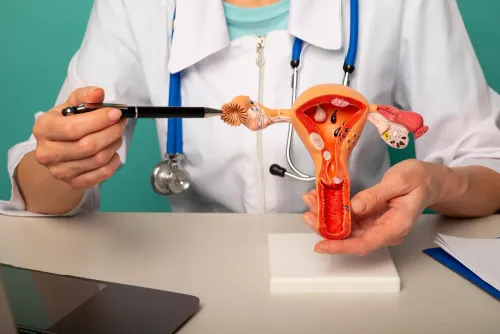
A clinician collects HPV from the cervix during an examination with a speculum. They use a collection brush or similar device, much like the procedure for a Pap test. The laboratory may use the specimen for HPV testing, cytology, or both.
| Collection method | What happens | What the result can provide |
|---|---|---|
| Clinician-collected sample | A speculum opens the vagina while a brush collects cells from the cervix. | HPV testing and, when ordered, Pap-cell assessment |
| Self-collected vaginal HPV test | You collect a vaginal sample yourself, following the clinic’s instructions. | HPV testing only; it is not the same as a cervical sample and does not provide a Pap-cell assessment |
Self-collection is available only where approved and offered. A positive self-collected result usually requires clinician-collected cervical testing or colposcopy. Ask whether it is unsuitable after a previous high-grade abnormality, during symptoms, or when pregnancy, immune status, or another medical condition changes the follow-up pathway.
Before either test, confirm the clinic’s HPV test preparation instructions about sex, douching, vaginal medicines, heavy bleeding, and pregnancy-specific timing. Protocols differ by test and setting, so do not assume advice from a previous test applies now.
Ask for the HPV test results time and how the clinic will release them: results can take several days to a few weeks, depending on the laboratory.
What happens after a positive or negative HPV test?
Positive HPV test next steps depend on estimated risk, not the word “positive” alone. Clinicians combine the HPV genotype, Pap findings, age, previous screening results, and history of treatment before choosing repeat HPV-based testing, reflex cytology, colposcopy, or treatment.
| Result | What it indicates | Possible next step |
|---|---|---|
| High-risk HPV positive with reassuring Pap | HPV is detected, but immediate risk may be low | Repeat HPV-based testing after an interval or review reflex cytology |
| HPV16 or HPV18 positive with a negative Pap | Higher-risk genotype detected despite normal-looking cells | Colposcopy after HPV test; U.S. risk-based guidance can recommend this immediately |
| HPV negative | No high-risk HPV was detected in the sample | Use the interval linked to the chosen screening method, unless history or special risks change it |
| High-risk HPV with significant cell changes | HPV and abnormal cells create a higher estimated risk | Colposcopy or treatment, depending on the findings |
Most HPV infections become undetectable without treatment. Persistent infection with a cancer-associated type can cause cervical-cell changes over time. A new positive result does not prove a recent infection or infidelity: HPV can remain undetectable for years and later become detectable again.
The negative HPV test meaning is reassuring, not permanent immunity. An HPV diagnosis alone does not mean infertility. Future pregnancy concerns relate more to treatment such as LEEP or cone biopsy, which can affect pregnancy management and may increase preterm-birth risk.
How do vaccination, pregnancy, menopause, and hysterectomy change HPV screening?
HPV vaccination lowers the risk from vaccine-covered types, but it does not treat an existing infection. An HPV test after vaccination remains necessary at the age-appropriate interval.
- HPV testing during pregnancy does not automatically stop routine screening. If an abnormal result requires evaluation, colposcopy can be performed; endocervical curettage and treatment of precancer without suspected cancer are avoided. Excisional procedures are reserved for suspected cancer.
- HPV screening after menopause does not end merely because periods have stopped. Tell your clinician about vaginal dryness or discomfort so the examination can be adjusted; do not use these symptoms as a reason to skip surveillance.
- An HPV test after hysterectomy depends on what was removed and why. After a total hysterectomy that removed the cervix for a benign reason, screening is usually unnecessary when you have no history of high-grade precancer or cervical cancer. A supracervical hysterectomy leaves the cervix, so screening continues.
- Treatment for CIN2, CIN3, adenocarcinoma in situ, or cervical cancer replaces routine screening with long-term, individualized surveillance. Do not stop at 65 solely because of age if this history requires continued follow-up.
Dr Shikha Sardana can reconcile prior reports, pregnancy plans, symptoms, and the tests available at the clinic before choosing between routine screening, surveillance, or pregnancy-specific evaluation.
Related service
Cervical Cancer Screening, HPV Vaccination & Preventive Women's Health Cervical Cancer Screening, HPV Vaccination & Preventive Women's Health Dr Shikha Sardana offers comprehensive Cervical Cancer Screening, HPV Vaccination, and Preventive Women's Health services to help women maintain... View service → |
Frequently asked questions
When do you need an HPV test based on age and screening history?
Routine cervical cancer screening starts at 21 for average-risk people with a cervix. From ages 21 to 29, Pap testing is commonly used; from 30 to 65, HPV testing alone, co-testing, or Pap testing may apply based on your screening history and local guidance. Follow-up depends on prior results, not age alone.
How does an HPV result differ from a Pap result?
An HPV test looks for high-risk human papillomavirus types linked to cervical cancer. A Pap test examines cervical cells for abnormalities. A positive HPV result does not mean that abnormal cells or cancer are present.
What happens during HPV collection, and can you use a self-collected sample?
During clinician collection, a speculum holds the vaginal walls apart while a small brush collects cells from the cervix. Self-collected vaginal HPV samples are available in some settings, but they must use an approved kit and follow local instructions; they do not replace follow-up after a positive result.
What happens after a positive or negative HPV test?
A negative high-risk HPV test means your immediate risk is low, so your clinician may recommend routine screening at the next interval. After a positive result, follow-up can include a Pap test, repeat HPV testing, or colposcopy, depending on the HPV type, cell findings, and previous results.
How do vaccination, pregnancy, menopause, and hysterectomy change HPV screening?
HPV vaccination does not eliminate the need for screening. Pregnancy usually does not cancel indicated screening, although colposcopy and treatment decisions require pregnancy-specific care. After menopause, screening still follows age and history. After a total hysterectomy with cervix removal for a non-cancer reason and no history of high-grade precancer, screening is usually not needed; ask your clinician if the cervix remains or you have a relevant history.