

Delayed conception is not defined by a single missed month or an isolated abnormal test. By the end, you will know when evaluation is due, which tests usually come first for each partner, how timing affects results, and how a specialist combines the findings before recommending treatment.
Key takeaways
- Seek evaluation after 12 months of unprotected intercourse under age 35.
- Both partners begin the assessment because fertility factors can affect either person.
- Initial testing checks ovulation, ovarian function, semen quality, and reproductive anatomy.
- Doctors combine all findings before recommending treatment or further testing.
When delayed conception warrants a fertility evaluation
The female partner’s age and the time spent trying determine when to see a fertility specialist. Delayed conception usually warrants evaluation after 12 months of regular, unprotected intercourse when she is younger than 35. This is the 12 months infertility threshold.
At ages 35 to 39, seek assessment after six months of trying rather than waiting a full year. The 6 months infertility age 35 threshold reflects the effect of declining egg quantity and quality over time. At age 40 or older, arrange an evaluation without delay.
These timelines assume intercourse occurs regularly without contraception. Irregular cycles, absent periods, medical history, and known risks can move the starting point earlier, even if you have not reached six or 12 months.
Seek earlier assessment if you have:
- Irregular or absent periods, which can indicate inconsistent or absent ovulation
- Suspected endometriosis, including severe period pain or pain during intercourse
- Suspected tubal disease
- A previous pelvic infection, sexually transmitted infection, or pelvic surgery
- Two or more pregnancy losses
- A known or suspected male-factor risk, such as testicular injury, surgery, infection, or difficulty with ejaculation
You do not need to wait for the time threshold when one of these warning signs applies. Evaluation should begin for both partners, because testing only one person can delay the correct diagnosis.
What the specialist asks, and why both partners start together
Both partners start the first consultation together because male factor infertility contributes alone or alongside a female factor in about half of infertility cases. Testing only the woman can delay the correct diagnosis and the right treatment.
The specialist uses your answers to choose a focused female fertility assessment rather than ordering every test:
- Cycle length, regularity, bleeding pattern, and signs of ovulation, such as predictable mid-cycle changes.
- Intercourse frequency and timing, plus the duration of unprotected attempts.
- Previous pregnancies, births, abortions, and miscarriages.
- Pelvic infections, sexually transmitted infections, abdominal or pelvic surgery, and any fertility treatment.
- Painful periods, painful intercourse, or other endometriosis symptoms that could point to endometriosis or pelvic adhesions.
- Medicines, chronic illnesses, and family history of infertility, early menopause, recurrent pregnancy loss, or genetic conditions.
For the male partner, questions cover previous fertility, testicular injury or surgery, infections, childhood conditions such as undescended testes or mumps, and exposure to heat or workplace toxins. The specialist also records current medicines, anabolic steroid use, and changes in sexual function.
This history links symptoms and risks to test choices. A regular cycle does not exclude a sperm problem, and previous fatherhood does not rule out a current one; both partners therefore need assessment from the outset.
The first-line tests for the female and male partner
A pregnancy test comes first when pregnancy is possible, because treatment and some examinations change if conception has already occurred. The initial work-up then matches each test to a specific question.
1. For the female partner, a pelvic examination looks for cervical, vaginal, uterine, or adnexal findings that need attention. Transvaginal ultrasound fertility assessment examines the uterus, endometrium, ovaries, fibroids, and some signs of adenomyosis. It cannot confirm open fallopian tubes.
Regular 21–35-day cycles often indicate ovulation. When biochemical confirmation is needed, progesterone ovulation test timing is about one week before the expected next period; a result above 3 ng/mL supports recent ovulation, but one result cannot measure luteal-phase quality.
An AMH test, antral follicle count, and early-follicular-phase FSH mainly predict ovarian response to stimulation and guide treatment counselling. They do not prove natural fertility or infertility. Order thyroid or prolactin testing for menstrual disturbance, amenorrhea, oligomenorrhea, galactorrhea, symptoms, or relevant risk—not automatically for everyone.
2. The male partner needs semen analysis after 2–7 days of abstinence. It measures volume, sperm concentration, total count, motility, morphology, and vitality. Repeat an abnormal result because ejaculates vary.
Hormone testing, scrotal examination, or ultrasound enters the work-up for abnormal semen results, erectile or ejaculatory problems, small testes, pain, swelling, or suspected obstruction. Targeted genetic testing is used for severe oligospermia, azoospermia, or particular examination findings.
How the specialist checks the uterus and fallopian tubes
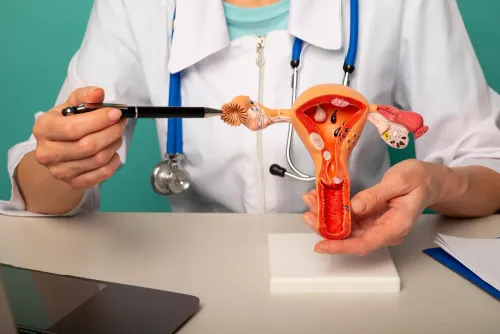
Transvaginal ultrasound gives the first view of the uterus, endometrium, ovaries, fibroids, and some signs of adenomyosis. It cannot prove that the fallopian tubes are open, so a separate tubal-patency test is needed.
| Test | What it shows | Main limitation |
|---|---|---|
| Hysterosalpingography HSG | X-ray contrast passing through the tubes; some uterine-cavity abnormalities | Does not reliably diagnose endometriosis |
| Saline infusion sonography | Saline outlining the cavity; polyps and submucosal fibroids | Does not directly confirm tubal patency |
| HyCoSy fertility test | Ultrasound tracking contrast through the tubes | Uses contrast and ultrasound rather than X-ray |
| Hysteroscopy | Direct view of the uterine cavity, with treatment of some polyps or fibroids | Does not assess tubal patency by itself |
| Diagnostic laparoscopy | Direct inspection for endometriosis, adhesions, or other pelvic disease | Invasive, so not routine screening |
HSG is useful when the main question is whether contrast can pass through each tube. A normal result does not exclude endometriosis or every pelvic cause of infertility. Saline infusion sonography is better when an abnormal cavity, such as a polyp or submucosal fibroid, is the concern.
Hysteroscopy infertility assessment allows direct treatment during the same procedure, but it cannot replace a tubal study. Diagnostic laparoscopy is reserved for suspected endometriosis, adhesions, or another specific indication.
Most cavity and tubal tests are scheduled after menstruation ends and before ovulation, often cycle days 5 to 10, after excluding pregnancy. The test purpose, cycle length, bleeding pattern, and planned treatment determine the exact appointment.
How results are combined before a diagnosis or treatment decision
Fertility test results interpretation depends on the pattern, not the most alarming number. Ultrasound and hormone findings change meaning with menstrual-cycle day, while semen measures vary between ejaculates; one abnormal semen analysis does not establish its cause. A repeat semen analysis, interpreted against current laboratory reference standards, helps distinguish a persistent finding from ordinary variation.
| Finding | Why it matters | Usual response |
|---|---|---|
| Cycle-timed ultrasound or hormones | The same measurement can mean different things on different cycle days | Match the result with cycle records and the test’s purpose |
| Abnormal semen result | It may reflect ejaculate-to-ejaculate variation rather than the underlying cause | Repeat the analysis before assigning a male-factor diagnosis |
| Routine add-on tests | Postcoital testing, basal-body-temperature charting, and routine sperm DNA-fragmentation testing are not standard first-line tests for most couples | Order them only for a specific clinical question |
| Targeted genetic concern | Karyotyping may apply to selected severe male-factor infertility or recurrent pregnancy loss; Y-chromosome-microdeletion testing may apply to severe oligospermia or azoospermia; CFTR testing is relevant when congenital absence of the vas deferens is suspected | Test when the history or semen pattern supports it |
Unexplained infertility means adequate-appearing ovulation, at least one patent tube, and no major semen abnormality despite unsuccessful conception. It means current tests have not identified the problem, not that no biological cause exists. Combined infertility factors can coexist even when each partner’s individual results appear normal.
A consultation with Dr Shikha Sardana can help you organise cycle records, prior reports, and specific questions before choosing the next investigation or treatment.
Related service
Comprehensive Fertility Evaluation & Female/Male Infertility Treatment Comprehensive Fertility Evaluation & Female/Male Infertility Treatment Dr Shikha Sardana offers comprehensive fertility evaluation and personalized infertility treatment for both women and men to identify the underlying... View service → |
Frequently asked questions
When should a couple seek a fertility evaluation?
Evaluation is generally warranted after 12 months of regular, unprotected intercourse when the female partner is younger than 35. Earlier assessment is appropriate when there are known reproductive health concerns or other warning signs.
Why do both partners start the fertility evaluation together?
Fertility difficulties can involve the female partner, the male partner, both partners, or neither identifiable factor. Starting together avoids delays and ensures that both medical histories and test results inform the plan.
What are the first-line fertility tests?
The female partner’s assessment may examine ovulation and ovarian function, while the male partner usually starts with a semen analysis. The specialist selects additional tests from the couple’s history and initial findings.
How are the uterus and fallopian tubes evaluated?
The specialist uses imaging and uterine or tubal assessment to check the shape of the uterus and whether the fallopian tubes are open. The appropriate test depends on the clinical history and the question that needs answering.