

Fertilization can fail even when eggs and sperm are placed together in a laboratory dish, especially when sperm cannot move, bind to the egg, or penetrate it. By the end, you will understand what ICSI changes, when it adds value over conventional IVF or IUI, and what it still cannot guarantee after fertilization.
Key takeaways
- ICSI injects one selected sperm directly into a mature egg.
- ICSI is most useful when sperm-related fertilization problems are likely.
- Not every egg is mature enough or suitable for ICSI.
- Ask about risks, alternatives, and the plan if fertilization or embryo development fails.
What happens during ICSI and why conventional IVF can fail
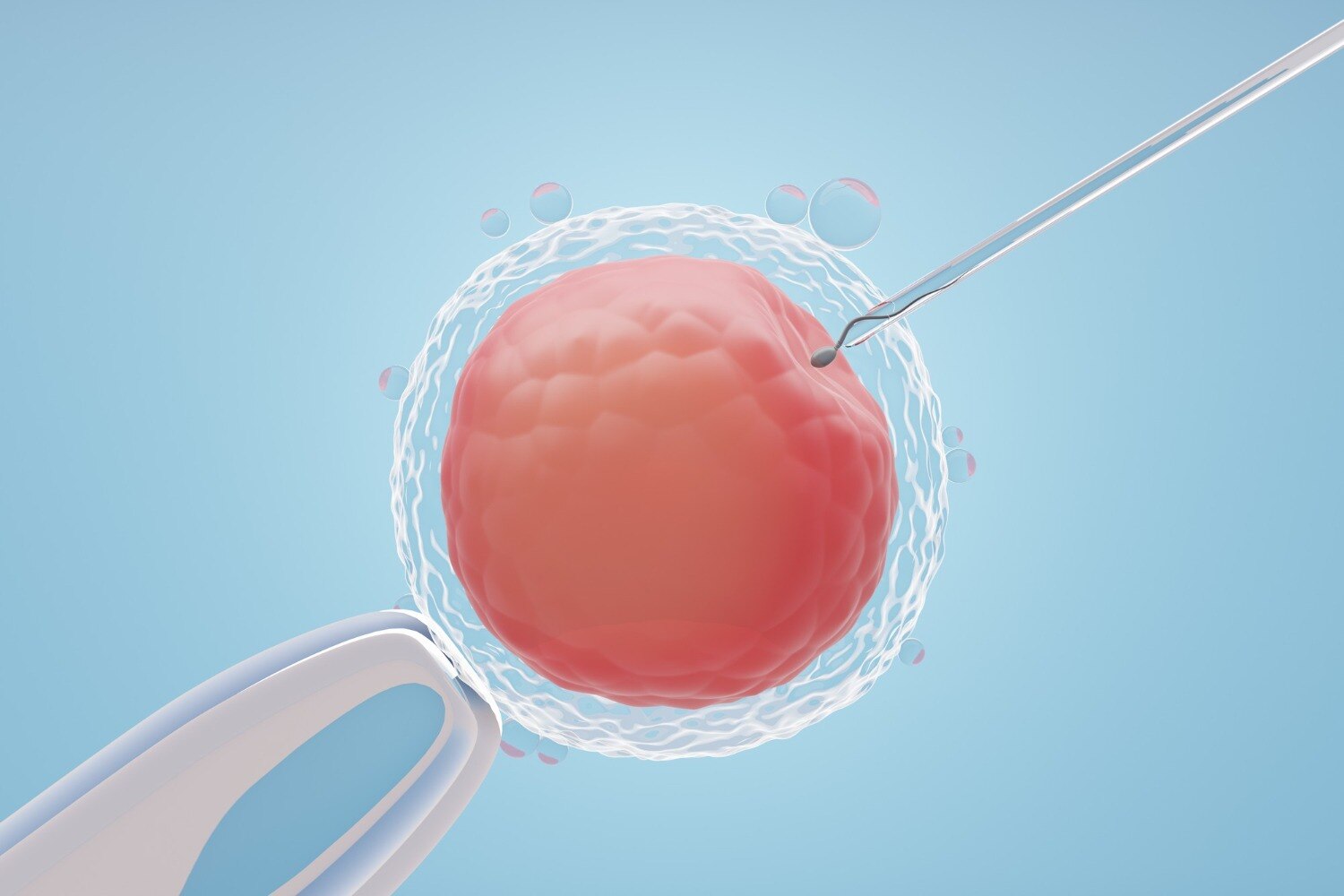
During an ICSI procedure, an embryologist selects one sperm under a microscope, immobilizes it by gently contacting its tail, and draws it into a fine injection pipette. The pipette passes through the egg’s outer layers and releases the sperm into the cytoplasm of a mature egg.
This sperm injection bypasses the need for the sperm to swim to, bind with, and penetrate the egg.
ICSI is considered when fertilization barriers include:
- Very low sperm concentration or poor motility
- Severe abnormal sperm morphology
- Obstructive or non-obstructive azoospermia requiring surgically retrieved sperm
- Previous IVF with failed or unexpectedly low fertilization
- Suspected problems with sperm–egg binding or penetration
Conventional IVF fertilization places many sperm around the egg and relies on one sperm completing every step independently. ICSI improves access to the egg, but it does not guarantee normal fertilization: the egg can be damaged or lysed during injection, show abnormal fertilization, or remain unfertilized.
| Option | Laboratory requirement | Main limitation |
|---|---|---|
| Conventional IVF | Many functional sperm must reach, bind to, and penetrate the egg independently | It can fail when sperm movement, shape, number, or binding is severely impaired |
| ICSI | One viable sperm is injected into the cytoplasm of a mature egg | It cannot correct poor egg quality or guarantee fertilization, embryo development, pregnancy, or live birth |
When ICSI is more useful than IVF or IUI
IUI places prepared sperm inside the uterus, but fertilization still depends on sperm travelling through the reproductive tract, reaching the egg, binding to it, and penetrating it. It cannot overcome a blocked fallopian tube or a severe sperm shortage.
| Option | What it requires | When it is useful |
|---|---|---|
| IUI | Sufficient moving sperm, at least one open fallopian tube, and an ovulated egg | Mild sperm problems or unexplained infertility |
| Conventional IVF | Eggs retrieved into a laboratory dish and enough functional sperm to move toward, bind to, and penetrate an egg without assistance | Reassuring sperm function, blocked tubes, or failed simpler treatment |
| ICSI | An embryologist injects one viable sperm into the cytoplasm of a mature egg | Severe male-factor infertility, selected sperm-retrieval cases, or prior IVF fertilization failure |
ICSI reduces the need for sperm movement and penetration, but it still needs a mature egg and a viable sperm. It is most clearly justified for very low sperm concentration or motility, severe abnormal morphology, obstructive azoospermia, selected non-obstructive azoospermia, surgically retrieved sperm, or a previous IVF cycle with failed or very low fertilization.
Routine ICSI is not an automatic upgrade when sperm and egg findings are reassuring. The injection adds a small risk that the pipette will damage or lyse an egg, without consistent evidence of better pregnancy or live-birth outcomes in that setting.
Conventional IVF remains an appropriate laboratory method when sperm can reasonably fertilize the egg independently.
How clinicians decide which eggs receive ICSI
The decision is made before ovarian stimulation and confirmed during monitoring, not after the eggs are collected. Clinicians review semen concentration, movement and shape, the cause of absent sperm in the ejaculate, the source and quality of retrieved sperm, egg maturity, and any previous IVF fertilization result.
| Finding | Laboratory plan | What happens to mature eggs |
|---|---|---|
| Reassuring sperm and no prior fertilization problem | Conventional IVF may be suitable | Sperm surround the eggs |
| Severe male-factor findings, surgically retrieved sperm, or failed/low prior fertilization | ICSI is usually considered | The laboratory generally injects each suitable mature egg |
| Mixed findings or a specific prior fertilization concern | IVF and ICSI may be divided within the cohort | The team explains which mature eggs receive injection |
The cycle then proceeds through ovarian stimulation, ultrasound and hormone monitoring, and egg retrieval. A partner provides semen, or the team performs surgical sperm retrieval when azoospermia has an appropriate cause and sperm production is present.
In the laboratory, sperm are prepared and one is injected into each selected mature egg. The next morning, fertilization assessment checks for two pronuclei, the usual laboratory sign of normal fertilization. Embryos continue in culture before transfer or freezing, followed by pregnancy testing after transfer.
Ask:
- Why is ICSI recommended for this cycle?
- Will every mature egg be injected, or will methods be divided?
- What happens if sperm cannot be retrieved?
- How will the laboratory report normal fertilization?
A consultation with Dr Shikha Sardana can help a patient in Chandigarh connect these findings to an individualized plan rather than treating ICSI as a routine add-on.
Related service
IVF, ICSI & IUI Treatment Dr Shikha Sardana offers advanced IVF (In Vitro Fertilization), ICSI (Intracytoplasmic Sperm Injection), and IUI (Intrauterine Insemination)... View service → |
What the treatment team does when the cycle does not proceed normally
An ICSI injection is not the finish line. Some eggs do not survive the procedure, show abnormal fertilization, or remain unfertilized despite sperm being placed inside them.
Immature eggs cannot be injected in the usual way because ICSI requires a mature egg. The laboratory may reassess them after further maturation, but fewer eggs can remain available for treatment.
If sperm cannot be obtained from the ejaculate, the team may arrange sperm retrieval from the epididymis or testicle when sperm production and the cause of azoospermia make that reasonable. ICSI can use retrieved sperm; it does not restore sperm production.
If no eggs fertilize, the team reviews egg maturity, the sperm source and quality, injection technique, and laboratory findings before proposing another plan. If fertilized eggs form but stop developing, ICSI has completed its narrow task without producing a transferable embryo.
- The laboratory continues embryo culture for several days while observing cell division and development.
- The team selects a suitable embryo for embryo transfer or freezing, based on development and the treatment plan.
- During embryo transfer, a thin catheter places the selected embryo inside the uterus.
- A pregnancy test is scheduled after transfer at the time advised by the clinic.
Successful injection is not the same as fertilization, implantation, pregnancy, or live birth. Each stage depends on factors that ICSI does not control, including embryo development, genetic health, uterine conditions, and maternal age.
The limits and risks to discuss before choosing ICSI
ICSI addresses one stage: fertilization. It can help a sperm reach or penetrate an egg, but it cannot correct poor egg quality, ovarian aging, embryo chromosome abnormalities, impaired embryo development, uterine disease, blocked implantation, or causes of miscarriage.
After injection, embryos still need to develop, undergo selection for transfer or freezing, implant, and produce a pregnancy.
| Concern | What ICSI may address | What it cannot address |
|---|---|---|
| Fertilization | Sperm failing to reach, bind to, or penetrate the egg | Poor egg quality or an egg that cannot activate normally |
| Embryo development | A fertilization barrier caused by severe male-factor infertility | Embryo chromosome abnormalities or impaired embryo development |
| Pregnancy | Delivery of a sperm into a mature egg | Uterine disease, blocked implantation, miscarriage causes, or ovarian aging |
The injection itself adds a laboratory risk: the fine pipette can damage or lyse an egg. This is uncommon in experienced laboratories, but it makes ICSI an intervention rather than a risk-free upgrade. Severe male infertility can also have a genetic cause.
Chromosomal abnormalities and Y-chromosome microdeletions may warrant genetic evaluation and counseling; a Y-chromosome deletion can pass to male children conceived through ICSI.
Sperm DNA fragmentation alone does not prove that ICSI will improve outcomes, so routine sperm DNA fragmentation testing is not appropriate for every couple. Reported congenital-abnormality differences between ICSI and conventional IVF are difficult to separate from severe male infertility and related risk factors.
Ask which risk comes from the procedure and which comes from the diagnosis.
Frequently asked questions
Why can conventional IVF fail when ICSI may help?
Conventional IVF leaves sperm to reach and enter the egg on its own. ICSI may help when sperm cannot adequately move toward, attach to, or penetrate the egg, or when previous IVF produced little or no fertilization.
When is ICSI more useful than IVF or IUI?
ICSI is more useful when severe male-factor infertility, surgically retrieved sperm, or failed fertilization with conventional IVF is present. IUI is less suitable when sperm problems are severe or the fallopian tubes are blocked.
How do clinicians decide which eggs receive ICSI?
The embryologist checks egg maturity after retrieval. ICSI is performed on mature eggs that are suitable for injection; immature or damaged eggs may not be injected.
What happens if the ICSI cycle does not proceed normally?
The team monitors fertilization and embryo development, explains findings such as failed fertilization or arrested growth, and discusses whether to continue, freeze suitable embryos, investigate causes, or change the next treatment plan.
What risks and limits should you discuss before choosing ICSI?
ICSI does not guarantee fertilization, implantation, pregnancy, or birth. Discuss egg damage during injection, poor embryo development, the underlying fertility problem, treatment alternatives, and risks specific to your medical history.