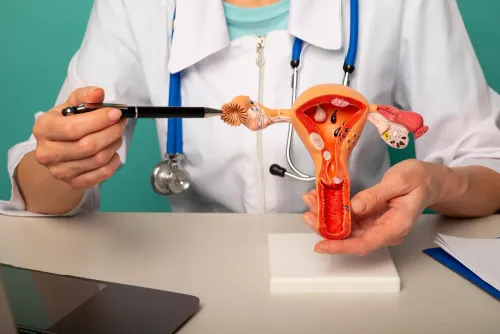



The fallopian tubes play a vital role in natural conception by allowing the egg and sperm to meet. When one or both tubes become blocked, fertilization may become difficult or impossible, depending on the extent and location of the blockage. Understanding tubal block treatment helps couples know when medical evaluation is appropriate and what treatment options may be available.
Couples in Panchkula often discover tubal blockage during infertility investigations rather than through symptoms, making timely fertility assessment particularly important.
What Causes Blocked Fallopian Tubes?
Several conditions can affect the fallopian tubes, including:
- Previous pelvic infections
- Endometriosis
- Pelvic inflammatory disease
- Prior abdominal or pelvic surgery
- Tuberculosis affecting the reproductive tract in selected cases
- Pelvic adhesions
- Hydrosalpinx
Some women have no obvious risk factors, highlighting the importance of fertility evaluation when conception is delayed.
Are There Any Symptoms?
Many women with blocked tubes experience no symptoms at all. Others may notice:
- Difficulty conceiving
- Chronic pelvic pain
- Painful menstrual periods
- Pelvic discomfort related to underlying conditions such as endometriosis
Because symptoms are often absent, investigations become an essential part of diagnosis.
How Is Tubal Blockage Diagnosed?
Your gynecologist may recommend one or more of the following:
- Hysterosalpingography (HSG)
- Sonosalpingography
- Ultrasound evaluation
- Diagnostic laparoscopy in selected cases
The choice of investigation depends on the patient's fertility history and other clinical findings.
Does Every Tubal Block Require Surgery?
Not necessarily. Treatment depends on several factors, including:
- Whether one or both tubes are blocked
- The location of the blockage
- Presence of hydrosalpinx
- Age of the woman
- Duration of infertility
- Other fertility factors affecting either partner
Some patients may benefit from surgical treatment, while others may be advised to consider assisted reproductive techniques depending on their individual circumstances.
Questions to Discuss With Your Gynecologist
If tubal blockage has been diagnosed, consider asking:
- Which tube is affected?
- Is the blockage partial or complete?
- Is surgery likely to improve fertility?
- Are additional fertility tests required?
- What are the available treatment options based on my condition?
A clear understanding of these factors helps couples participate in informed treatment decisions.
Why Early Evaluation Matters
Waiting too long before seeking fertility assessment may delay appropriate treatment. Couples under 35 years who have not conceived after one year of regular unprotected intercourse—and women over 35 after six months—should consider medical evaluation according to widely accepted fertility recommendations.
Dr. Shikha Sardana provides comprehensive fertility assessment for women with suspected tubal factor infertility, helping couples understand available diagnostic procedures and treatment pathways based on current clinical evidence.
Blocked fallopian tubes do not automatically rule out the possibility of pregnancy. With accurate diagnosis, individualized treatment planning, and appropriate reproductive care, many couples are able to explore suitable options for building their family while making informed decisions at every stage.