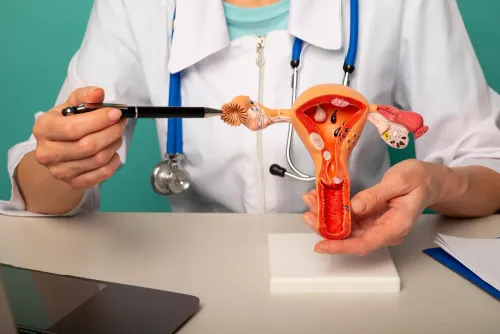



If pregnancy has not happened, the right time to seek advice depends on your age, cycle pattern, medical history and any known fertility risks. By the end, you will know when waiting is reasonable, when to book an appointment sooner, which first tests answer the key questions and how to prepare for a useful consultation.
Key takeaways
- Seek evaluation after 12 months if under 35 and trying regularly.
- Arrange an evaluation after six months from age 35 to 39.
- At age 40 or older, consult an IVF specialist without waiting.
- Both partners need assessment because fertility problems can affect either person.
How long should you try before consulting an IVF specialist?
If the woman is under 35, seek a fertility evaluation after 12 months of regular, unprotected intercourse without pregnancy. At ages 35 to 39, arrange an evaluation after 6 months trying to conceive. At age 40 or older, consult an IVF specialist without waiting for either interval.
- Under 35: Allow 12 months trying to conceive before seeking an evaluation, provided intercourse is regular and unprotected.
- Ages 35 to 39: Book an assessment after 6 months trying to conceive. Fertility declines more noticeably through the mid-30s, so delaying a full year can reduce the time available for decisions.
- Age 40 or older: Ask for evaluation at the outset. Waiting 12 months can postpone time-sensitive choices about treatment and pregnancy planning.
“Regular” means sex every 1 to 2 days during the fertile window, or about 2 to 3 times each week throughout the cycle. Poorly timed or infrequent intercourse can make conception take longer without proving a fertility disorder.
These time points are referral thresholds, not proof of permanent infertility. Many couples conceive after evaluation, with or without treatment. Consulting an IVF specialist does not obligate you to undergo IVF; recommendations may include continued attempts, timed intercourse, medication, insemination, surgery or IVF based on your findings, age and goals.
If you have difficulty conceiving, an assessment identifies the next sensible step rather than committing you to one procedure.
Which warning signs mean you should seek help earlier?
Do not wait six or 12 months if your periods are absent, very irregular, or ovulation is uncertain. Irregular periods and infertility often reflect infrequent or absent ovulation, so assessment can start now. Amenorrhea fertility concerns deserve prompt medical attention even before the usual time threshold.
| Warning sign | Why seek help early |
|---|---|
| Absent or very irregular periods | Ovulation may be infrequent or absent; treatment may begin with identifying the cause. |
| Suspected endometriosis, blocked tube, pelvic inflammatory disease, or ectopic pregnancy | Tubal damage or pelvic inflammation can reduce conception chances and change whether surgery, insemination, or IVF is suitable. |
| Previous pelvic or reproductive surgery | The link between pelvic surgery and fertility depends on the operation, scar tissue, and remaining tubal function. |
| Two or more clinical pregnancy losses | Request recurrent miscarriage evaluation rather than treating each loss as a separate delay. |
| Diminished ovarian reserve, chemotherapy, or pelvic radiotherapy | Time and ovarian response may be limited, affecting stimulation and embryo-planning choices. |
| Undescended testes, testicular injury, or known or suspected sperm problems | Male-factor infertility can require prompt semen testing, specialist treatment, or sperm retrieval. |
A reassuring AMH or antral follicle count does not prove that natural conception will occur soon; these tests mainly guide treatment planning. Seek early advice after prior chemotherapy or pelvic radiotherapy, and do not delay referral to complete the usual waiting period. These findings can change both urgency and treatment choices.
What counts as difficulty conceiving, and why are both partners assessed?
Difficulty conceiving means pregnancy has not occurred despite a genuine opportunity for conception. Infertility is assessed after 12 months of regular unprotected intercourse if the woman is under 35, after 6 months at ages 35 to 39, and without waiting at age 40 or older.
Poorly timed intercourse or infrequent sex can delay pregnancy without proving a fertility problem.
| Situation | What it means | What to check |
|---|---|---|
| Delayed conception | Pregnancy has not happened, but intercourse may not have covered the fertile window or occurred often enough | Timing, frequency and ovulation signs |
| Infertility assessment | The relevant time threshold has passed without pregnancy despite regular unprotected intercourse | Ovulation, fallopian tubes, uterus and sperm function |
Predictable cycles, slippery or stretchy cervical mucus around mid-cycle, and a positive ovulation predictor kit can provide useful ovulation signs. They do not prove that the fallopian tubes are open or that sperm production and movement are adequate.
Assess both partners from the start, even when the person trying to become pregnant has regular periods. Male factor infertility can exist with completely predictable cycles, so testing only one partner first can delay the correct diagnosis and treatment.
A semen analysis checks sperm concentration, movement and form. If the result is abnormal, repeat testing is commonly needed because semen measurements vary between samples; one abnormal report does not establish permanent infertility. Persistent abnormalities require assessment by a clinician experienced in male reproductive health.
What happens at the first fertility consultation and which tests may be offered?
At the first fertility consultation, the specialist reviews your menstrual and pregnancy history, miscarriages, contraception, sexual timing, medical and surgical history, medications, prior reports, and fertility risks affecting both partners. A relevant physical examination follows; this is not a promise of immediate IVF.
Initial fertility tests answer three separate questions:
| Question | Common tests | What they assess |
|---|---|---|
| Is ovulation occurring? | Cycle review, ovulation predictor kits, mid-luteal progesterone | Whether an egg is being released |
| Are the uterus and tubes suitable? | Pelvic ultrasound fertility test, HSG or HyCoSy | Uterus, ovaries, antral follicle count, and tubal patency |
| Is sperm production and delivery adequate? | Semen analysis | Sperm concentration, movement, form, and sometimes delivery concerns |
The specialist may offer an AMH test, basal FSH, or an antral follicle count. These ovarian-reserve tests help estimate response to stimulation and plan treatment; they do not predict natural conception on their own.
A pelvic ultrasound fertility test can identify fibroids, ovarian cysts, polycystic-appearing ovaries, or other findings that require follow-up. Hysterosalpingography uses contrast X-rays, while HyCoSy uses ultrasound and contrast to check whether the tubes are open.
Dr Shikha Sardana can help interpret these findings together, rather than treating one abnormal result in isolation; a low AMH, for example, does not by itself explain every delay or determine your only treatment option.
Related services
IVF, ICSI & IUI Treatment Dr Shikha Sardana offers advanced IVF (In Vitro Fertilization), ICSI (Intracytoplasmic Sperm Injection), and IUI (Intrauterine Insemination)... View service → |
Ovulation Induction & Follicular Monitoring Ovulation Induction & Follicular Monitoring Dr Shikha Sardana provides expert Ovulation Induction and Follicular Monitoring services to help women achieve successful ovulation and improve their... View service → |
How do age and appointment preparation change the decision?
At 29, an extra three months usually remains within the 12-month threshold. At 36, the six-month threshold matters because age and fertility change more noticeably through the mid-30s. At 41, waiting a full year can postpone time-sensitive decisions; miscarriage risk also rises as chromosomal abnormalities become more common.
| Age | Why the delay matters | Practical decision |
|---|---|---|
| 29 | A few additional months usually fit within the 12-month evaluation point. | Continue trying or arrange advice sooner if concerns exist. |
| 36 | Fecundity declines more noticeably through the mid-30s. | Book an assessment after six months, not after a full year. |
| 41 | Time-sensitive treatment choices and miscarriage risk require earlier review. | Seek evaluation without waiting; trying to conceive at 40 warrants prompt advice. |
Fertility treatment options depend on test results, age, goals and prognosis. They include continued attempts, timed intercourse, ovulation-induction medication, insemination, surgery or IVF. A consultation does not commit you to IVF.
Good fertility consultation preparation helps the specialist identify missing information quickly. Bring:
- Cycle dates and ovulation records
- Pregnancy and miscarriage documentation
- Operation notes from pelvic or reproductive surgery
- Medication and supplement lists
- Previous semen reports
- The date you and your partner began trying together
Ask which decisions are urgent, whether any test needs repeating, and what result will determine the next decision point.
Frequently asked questions
How long should you try before consulting an IVF specialist?
If the woman is under 35, seek evaluation after 12 months of regular, unprotected intercourse without pregnancy. At ages 35 to 39, seek help after six months. At age 40 or older, consult an IVF specialist without waiting.
Which warning signs mean you should seek fertility help earlier?
Seek help earlier with irregular or absent periods, severe pelvic pain, suspected endometriosis, previous pelvic surgery, recurrent miscarriage, known sperm problems, sexual difficulties, or prior chemotherapy or radiation.
What counts as difficulty conceiving, and why are both partners assessed?
Difficulty conceiving means pregnancy has not occurred after the recommended period of regular, unprotected intercourse. Both partners are assessed because ovulation, fallopian tubes, sperm production, and other factors can contribute to infertility.
What happens at the first fertility consultation?
The specialist reviews your menstrual, medical, surgical, sexual, and pregnancy history, then discusses timing and examination. Tests may include semen analysis, ovulation blood tests, pelvic ultrasound, ovarian reserve testing, and assessment of the fallopian tubes.
How should age and appointment preparation change the decision?
Age affects how long you should wait before evaluation, especially after 35. Bring menstrual dates, previous test results, medication details, surgery records, and information about prior pregnancies or fertility treatment.
Related services
Comprehensive Fertility Evaluation & Female/Male Infertility Treatment Comprehensive Fertility Evaluation & Female/Male Infertility Treatment Dr Shikha Sardana offers comprehensive fertility evaluation and personalized infertility treatment for both women and men to identify the underlying... View service → |
Tubal Block Evaluation & Fertility Treatment Tubal Block Evaluation & Fertility Treatment Dr Shikha Sardana offers comprehensive Tubal Block Evaluation and Fertility Treatment for women experiencing infertility due to blocked fallopian... View service → |
Endometriosis, Adenomyosis & Advanced Endometriosis Fertility Care Endometriosis, Adenomyosis & Advanced Endometriosis Fertility Care Dr Shikha Sardana provides comprehensive diagnosis and treatment for endometriosis, adenomyosis, and advanced endometriosis-related infertility. View service → |
Preconception Counseling Dr Shikha Sardana offers comprehensive Preconception Counseling to help couples prepare for a healthy pregnancy through personalized medical guidance... View service → |